
- How to Migrate from Rank Math to SureRank
- How to Migrate from Yoast to SureRank
- How to Migrate from SEOPress to SureRank SEO
- How to Migrate from Squirrly SEO to SureRank
- How to Migrate from All in One SEO (AIOSEO) to SureRank
- How to Migrate from Slim SEO to SureRank
- How to Migrate from The SEO Framework to SureRank
- Migration Failed: How to Diagnose
- After You Migrate: Verification and Cleanup Checklist
- Sitemaps in SureRank
- How to Enable Video Sitemap in SureRank Pro
- How to Enable the News Sitemap in SureRank
- How to Show the HTML Sitemap on Your Site in SureRank Pro
- How to Regenerate the Sitemap After Excluding a Post Type in SureRank
- Change the Sitemap URL in SureRank
- How to Enable Author Sitemap in SureRank
- How to Exclude Post Types from the Sitemap
- How to Enable the Author Sitemap and Why Authors Are Excluded (Pro)
- Editing Meta Box
- SureRank – Page SEO Checks
- Enabling Page SEO Checks in WordPress
- Image Alt Text – Automatic Optimization
- Link Manager
- Using the SureRank Front-End Meta Box
- How to Edit the Meta Title and Description for a Single Page or Post
- Controlling Indexing with Robot Instructions
- How to Set Global Title and Description Templates with Variables
- How to Set a Canonical URL and How the Canonical Field Works
- How to Set the Homepage, Shop, and Archive Title & Description
- Setting Up Site Information for Google’s Knowledge Panel
- Social Settings: Facebook/Open Graph, X (Twitter) Cards, and Profile Links
- Why Do My Image Links Redirect to a Blog Post or My Homepage?
- How to Fix WWW and Non-WWW Version Redirects to Improve Your SEO
- How to Fix: No H1 Heading Found on Your Homepage
- How to Fix Missing H2 Headings on Your Homepage
- Re-run Checks Button in SureRank
- Fix Critical Error: Another SEO Plugin Detected in SureRank
- Fix Warning: Site Tagline Is Not Set in SureRank
- How to Fix: Robots.txt Contains Invalid Rules in SureRank
- How to Fix Multiple SEO Plugins Detected on Your Site
- How to Fix: Homepage is Not Indexable by Search Engines
- Warning: Homepage Does Not Contain Internal Links
- How to Fix: Search Engine Title is Missing on the Page
- Page Level SEO: Broken Links Detected
- How to Fix Missing Alt Text on Images
- How to Fix Page URLs That Are Too Long
- Page Level SEO Warning: No Links Found on This Page
- Page Level SEO Warning: No Images or Videos Found
- Page Level SEO Warning: Missing Search Engine Description
- Page Level SEO Warning: No Subheadings Found on This Page
- Page Level SEO Warning: Canonical Tag is Missing
- Page Level SEO Warning: Open Graph Tags Missing
- What is Google Search Console and how does SureRank use it?
- Recommended Image Sizes
- SureRank – SEO Check Severity Guide
- Using SureRank with Other SEO Plugins – Best Practices
- Import/Export Feature – SureRank Plugin
- What is llms.txt and Does SureRank Support It?
- Does SureRank offer a keyword rank-tracking feature?
- Does SureRank Come With Google Analytics Integration?
- Email Summary in SureRank
- SureRank Role Manager
- Fixing a Fatal Error After Updating SureRank
- SureRank Server Requirements
- Search Engines Not Indexing Your WordPress Site?
- Sitemap Not Showing in SureRank
- Fixing robots.txt Issues in SureRank
- Why a Working Link Is Flagged as Broken (404)
- Which Pages Are Included in Your SureRank Sitemap
- Fixing False SEO Audit Warnings Caused by Caching
- Fixing “Couldn’t Fetch” for Your Sitemap in Google Search Console
- Troubleshooting: Favicon and Logo in Google Search Results (Supported Formats and CDN Gotchas)
- Customize XML Sitemap Top Bar with surerank_sitemap_top_bar_data
- Analyze ACF Field Content with SureRank
- Preserve Modified Date During Updates surerank_freeze_modified_date
- Customize Final Title Tag surerank_final_title
- Customize Post Type Archive Title Output surerank_post_type_archive_title
- Customize Archive Page Title with surerank_archive_title
- Customize the Search Results Page Title surerank_search_title
- Customizing the 404 Page Title surerank_not_found_title
- Customizing the Title Separator surerank_title_separator
- Disable SureRank’s Document Title Integration
- What Is AI Ready in SureRank?
- How to Fix the Indexing and Snippet Rules Result in SureRank AI Ready Checks
- How to Fix the Home Page Text Without JavaScript Result in SureRank AI Ready Checks
- How to Handle the OAuth Discovery Result in SureRank AI Ready Checks
- How to Handle the A2A Agent Card Result in SureRank AI Ready Checks
- How to Handle the Web Bot Auth Result in SureRank AI Ready Checks
- How to Fix the Site Slow and Site Unreachable Results in SureRank AI Ready Checks
- How to Fix the llms.txt Result in SureRank AI Ready Checks
- How to Fix the Content Signals Result in SureRank AI Ready Checks
- How to Fix the MCP Server Card Result in SureRank AI Ready Checks
Editing Meta Box
The SureRank plugin makes it easy to optimize your content directly from the WordPress editor. Using the Meta Box, you can control how your content appears in search engines and on social media platforms. This guide walks you through the process of accessing and editing the Meta Box.
Step-by-Step Guide to Editing Meta Box in SureRank
Access the Meta Box
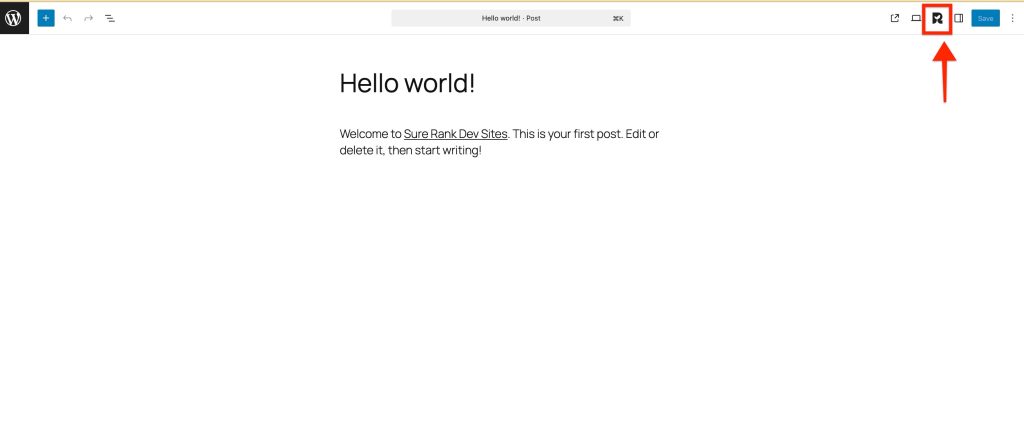
To begin, edit any page or post within WordPress. Look for the SureRank icon located in the top-right corner of the editor. This icon represents the SureRank Meta Box panel.
Open the Slide-in Panel
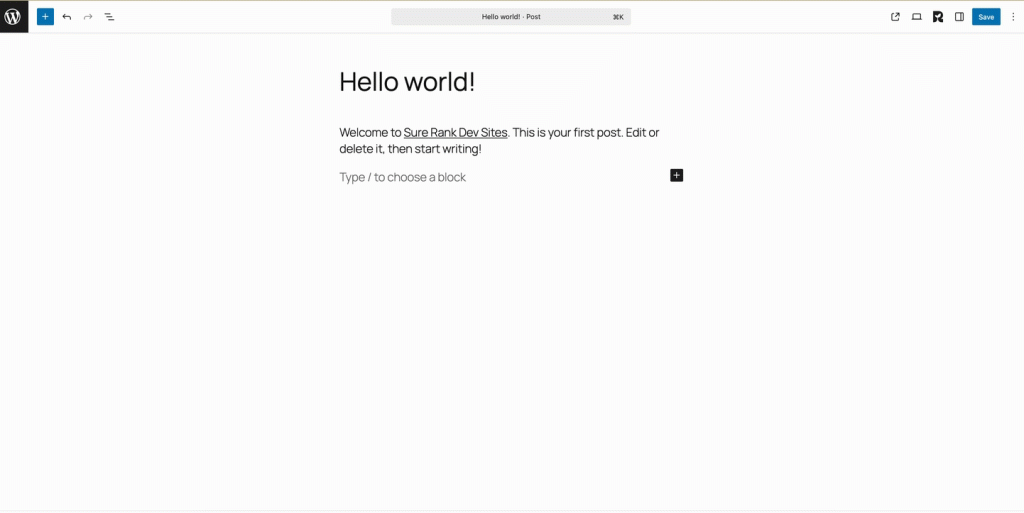
Click the SureRank icon to open the slide-in Meta Box panel.
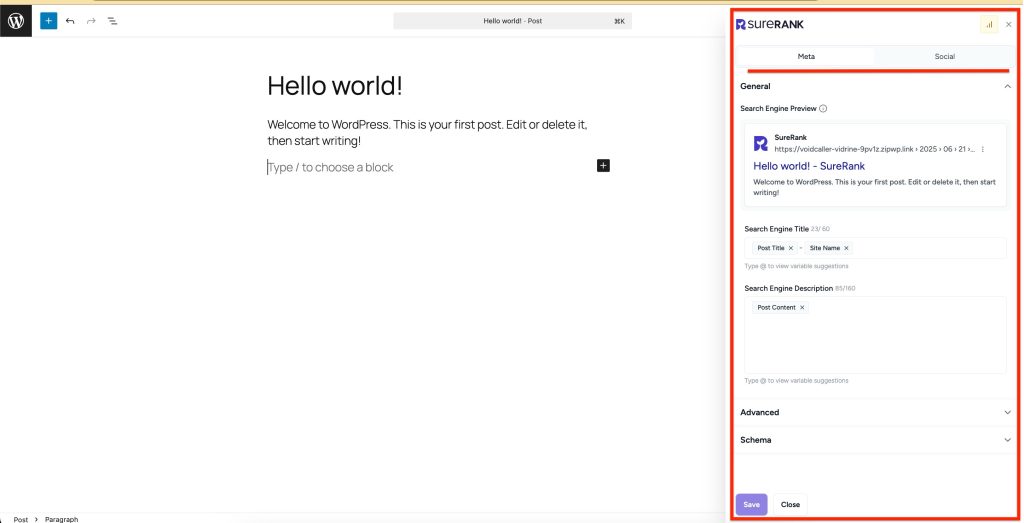
The panel includes Optimize and, when page analysis is available, Analyze:
- Optimize: edit metadata, social settings, robots instructions, and schema.
- Analyze: review page SEO checks when available.
Optimize: Meta Settings
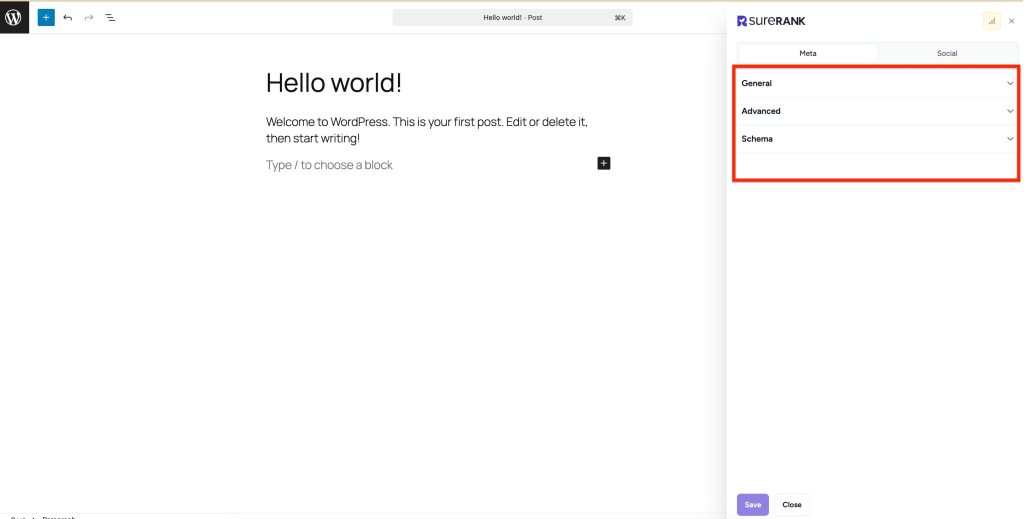
Under Optimize, the available sections include:
General, Social, Advanced, and Schema (when available).
General
Under General, you’ll find an approximate search preview. Google may rewrite titles and snippets, and truncation depends on available display width.
This includes the search engine title and description.
- Search Engine Title
- Search Engine Description
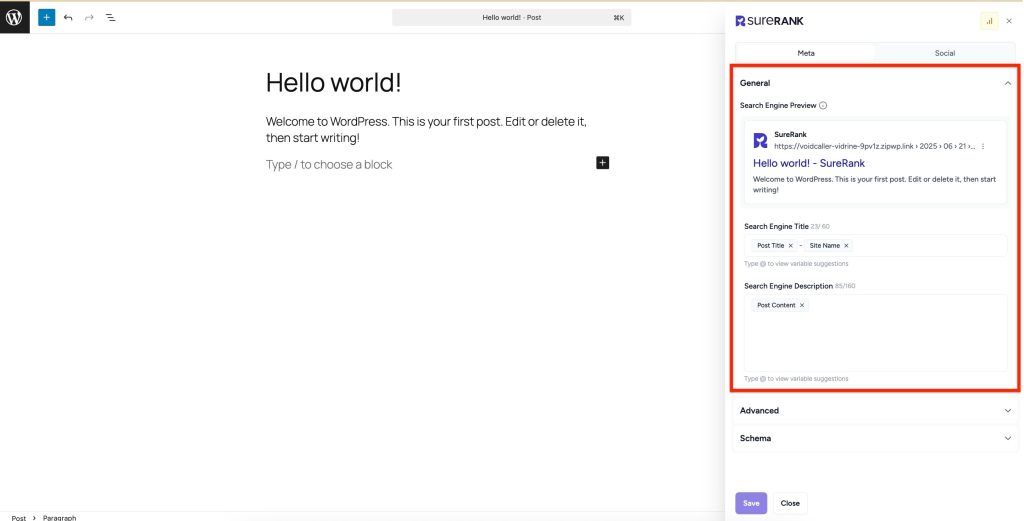
Search Engine Title
The Search Engine Title is the title that appears in search engine results for a specific page or post. It helps users and search engines understand what the page is about.
- Suggested length: Around 60 characters can be a useful starting point; it is not a hard limit.
- Variables: Use
@to insert dynamic values likePost Title,Site Name, etc. - You can include or remove elements like:
Post Title– the title of the current post or pageSite Name– the name of your website
Search Engine Description
The Search Engine Description is the meta description shown below the title in search engine results. It helps users understand the content of the page before clicking.
- Suggested length: Around 150–160 characters can be a useful starting point; display and truncation vary.
- Variables Available: Type
@to insert dynamic elements like post content, excerpt, or custom fields.
Tip: Well-crafted meta titles and descriptions improve your click-through rate and SEO visibility.
Advanced
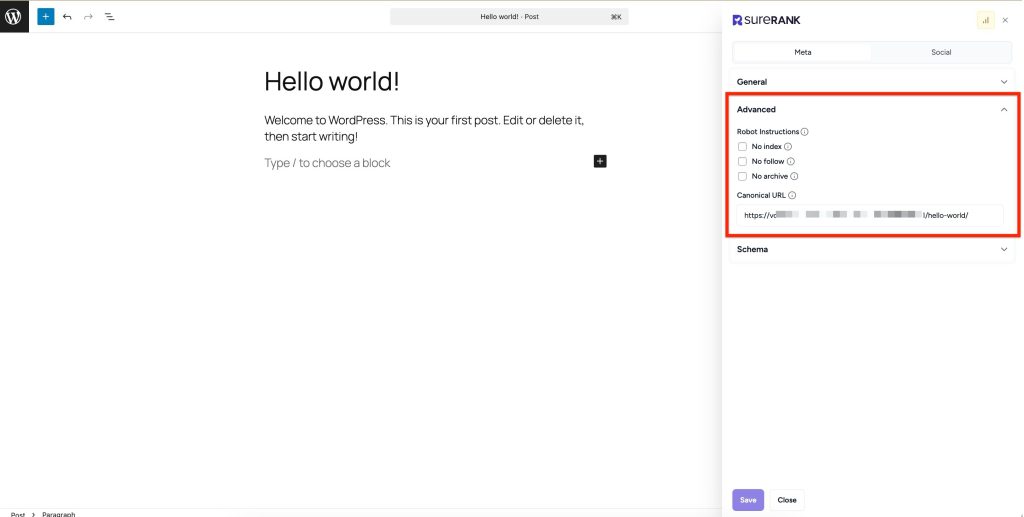
In the Advanced tab, you can configure meta robots settings, Canonical URL:
- Robot Instructions
- These settings provide robot instructions for the current post or page. Search engines decide whether and how to honor each directive.
- No Index – Prevents search engines from indexing this page.
- No Follow – Prevents search engines from following links on this page.
- No Archive: Google ignores noarchive because cached links are no longer offered. Support in other search engines varies.
- Canonical URL – This helps search engines understand which version of a page should be indexed, preventing duplicate content issues. Leave the field blank to let SureRank automatically determine and set the preferred URL.
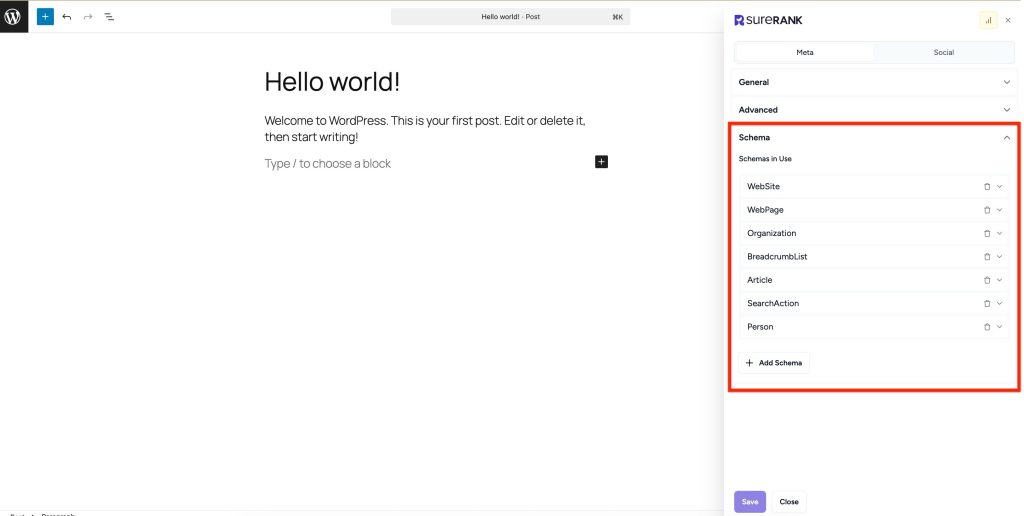
Schema
The Page-Level Schema section in SureRank lets you add structured data like WebSite, WebPage, Article, Organization, and more to individual posts or pages. This helps search engines understand your content better and improves your chances of rich results. Explore Page-Level Schema setup →
Social
Under Social Settings, there are two tabs:
Facebook, X (Twitter)
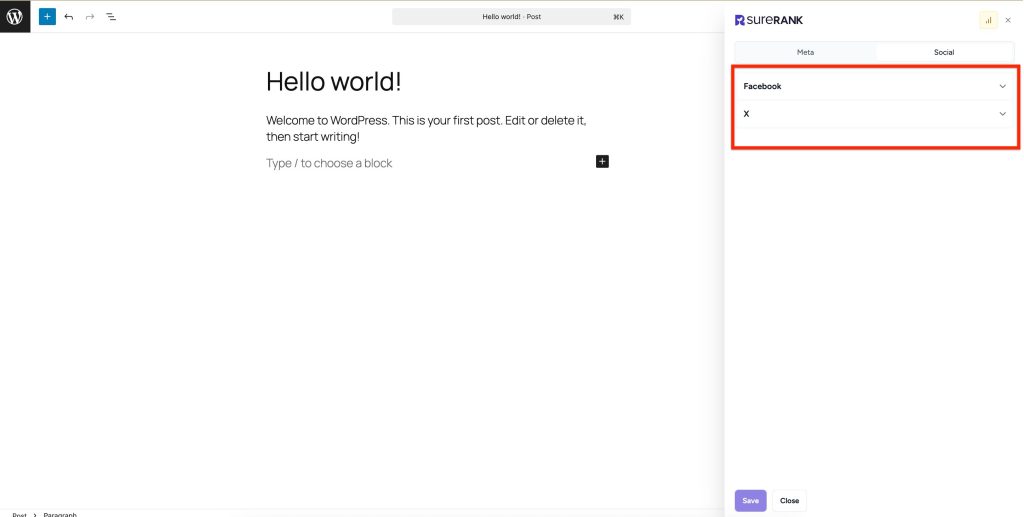
In the Social tab, you can define how your content will appear when shared on Facebook and Twitter (now X).
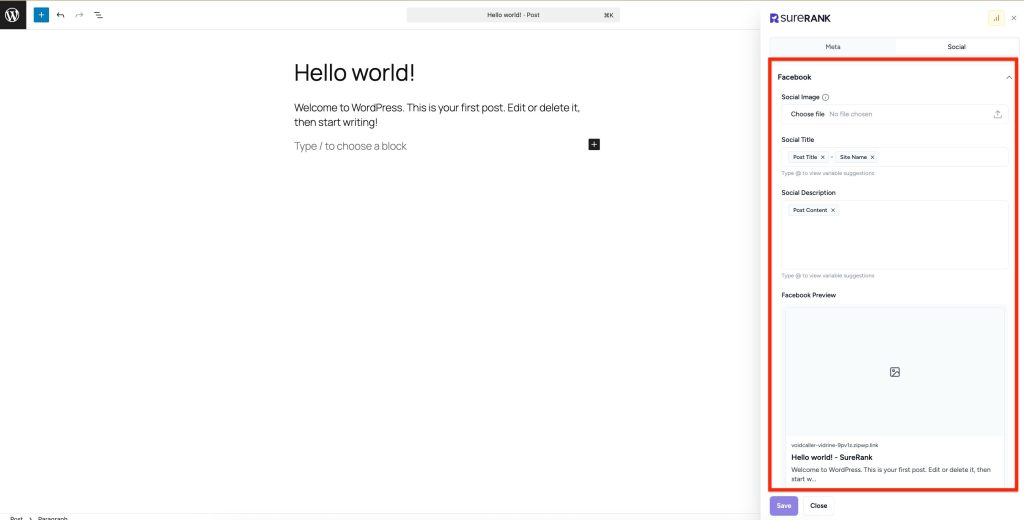
The Facebook Social Image settings allow you to customize how your page appears when it’s shared on Facebook. These settings help improve your link’s visual appeal and click-through rate by displaying an engaging preview.
- Social Image: Upload an image that will appear when the page is shared on Facebook. This image helps grab attention in social feeds.
- Social Title: Enter a custom title for Facebook shares. You can use dynamic variables by typing
@to insert values like the post title, site name, etc. - Social Description: Add a description that will appear below the title in the Facebook preview. Like the title, you can type
@to use dynamic variables. - Facebook Preview: This section shows a live preview of how your page will look when shared on Facebook, using the image, title, and description you’ve set.
X (Twitter)
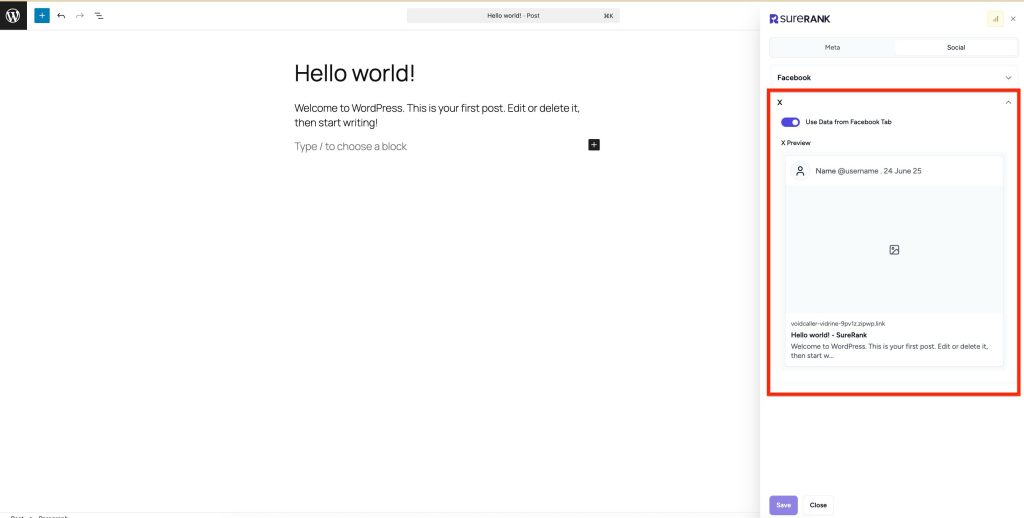
These settings allow you to customize how your content appears when shared on X (formerly Twitter). You can define a specific image, title, and description to optimize the preview shown on the platform.
- Use Data from Facebook Tab: Enable this toggle to automatically use the same Social Image, Title, and Description settings from the Facebook Tab. This saves time and ensures consistency across social platforms.
- Social Image: Upload an image that will appear when the page is shared on X (formerly Twitter). This image helps grab attention in social feeds.
- Social Title: Enter a custom title for X shares. You can use dynamic variables by typing
@to insert values like the post title, site name, etc. - Social Description: Add a description that will appear below the title in the X preview. Like the title, you can type
@to use dynamic variables. - X Preview: This section shows a live preview of how your page will look when shared on X, using the image, title, and description you’ve set.
That’s it! You’ve successfully configured your meta settings for SEO and social media using the SureRank Meta Box.
We don't respond to the article feedback, we use it to improve our support content.